

Hello friends! We’re almost done part 2 of our series, The Catholic Church’s Historical Teaching on Inflation. In the meantime, I wanted to share an idea from St. John Henry Newman that I found relevant. I’ve applied his Circle of Knowledge to our study. Enjoy!
Note: I’m not trained in philosophy, theology, or Newman, so please correct me if I’m missing something below. Thank you!
Newman’s Circle of Knowledge
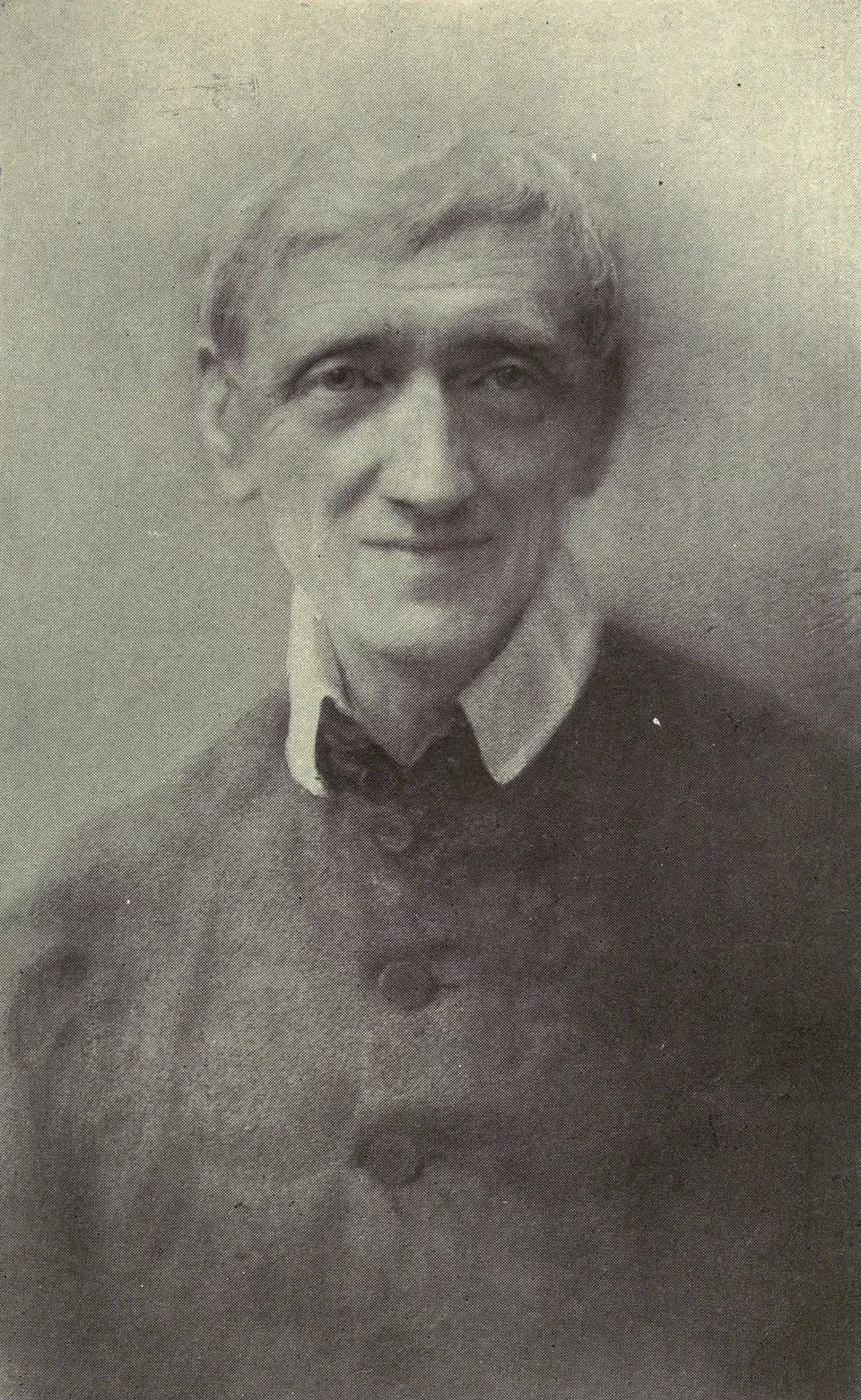
A 51-year-old John Henry Newman wrote about the Circle of Knowledge in his 1852 work, The Idea of a University. He argued that all branches of knowledge are interconnected and form a single, unified whole.
The interconnectedness of all truth
Because the universe is a creation of a single Creator, all facts and truths about it must eventually connect. Knowledge is not a collection of isolated subjects, but a circle, or a web. Every science (meaning any branch of learning; for example, history, literature, and economics) provides a partial view of reality. They complete, correct, and balance each other.
Omitting a science
It is dangerous to omit any branch of knowledge. If you remove one “slice” of the circle, the remaining sciences will naturally expand to fill the gap, but they will do so poorly because they are trying to answer questions outside of their domain.
Newman’s example was to argue that Theology (a science) must be included in the university curriculum. Without theology, the circle becomes warped. Not only because it is the study of God—a privileged place in the circle for a Christian—but also because it is a science.
For example, how can a Theology-lacking commentator journalist do their duty to report and comment on reality blind to moral and spiritual truth? We get distorted commentary. A distorted human experience for those following.
The removal of “True Economics”
We should expect that the circle is similarly warped upon a removal of economics. In the classical sense, economics is the study of scarcity, value, and the organic interaction of human choices. When “money printing” lightens the constraint of true post-Fall scarcity, economics as a science is no longer true. Its slice of the circle is compromised. Other sciences then compete to encroach upon its rightful domain.
Politics & Finance step up
Today, it seems that the sciences of Politics and Finance have expanded to fill the gap Economics left. Without the discipline of a “hard” economic reality, the distribution of money becomes increasingly a matter of political willpower. We fund ventures, whether private or public, that have assumed money is relatively infinite. The central bank—theoretically an Economic institution—loses its role. Its decisions are increasingly influenced by the encroaching asks of politicians wishing to prevent fallout from a market correction.
Confusion about scarcity
This removal of Economics creates confusion as well as excess scarcity for those who believe the false economic system is true. We begin to believe that resources are infinite rather than finite. We get political optimism and financial speculation, which waste resources. Popular messaging then doesn’t line up with the reality of prices of food and housing, which have dwindled in affordable supply. We are no longer looking at the truth of how things are, but at how we wished they were, or how we are told they are.
The Circle with vs. without Economics
Life in Newman’s balanced circle, with a True Economics, might look like this:
The dominant force is unified truth / natural law
The exchange of money reflects what is valuable this side of heaven
More resources and fairer distribution; intellectual and social harmony
Educated, balanced citizens
Life in the warped “money printing” circle, we might say would look like this:
The dominant forces are political will / growth finance
Money is a tool for social engineering, influenced by the Father of Lies
We misallocate resources; confusion and blame game
A confused and dependent populace
Our next post is part 2 of our miniseries, The Catholic Church’s Historical Teaching on Inflation. There we’ll study Papal responses to questions from 12th-century Spanish kings about inflation in gold coins.
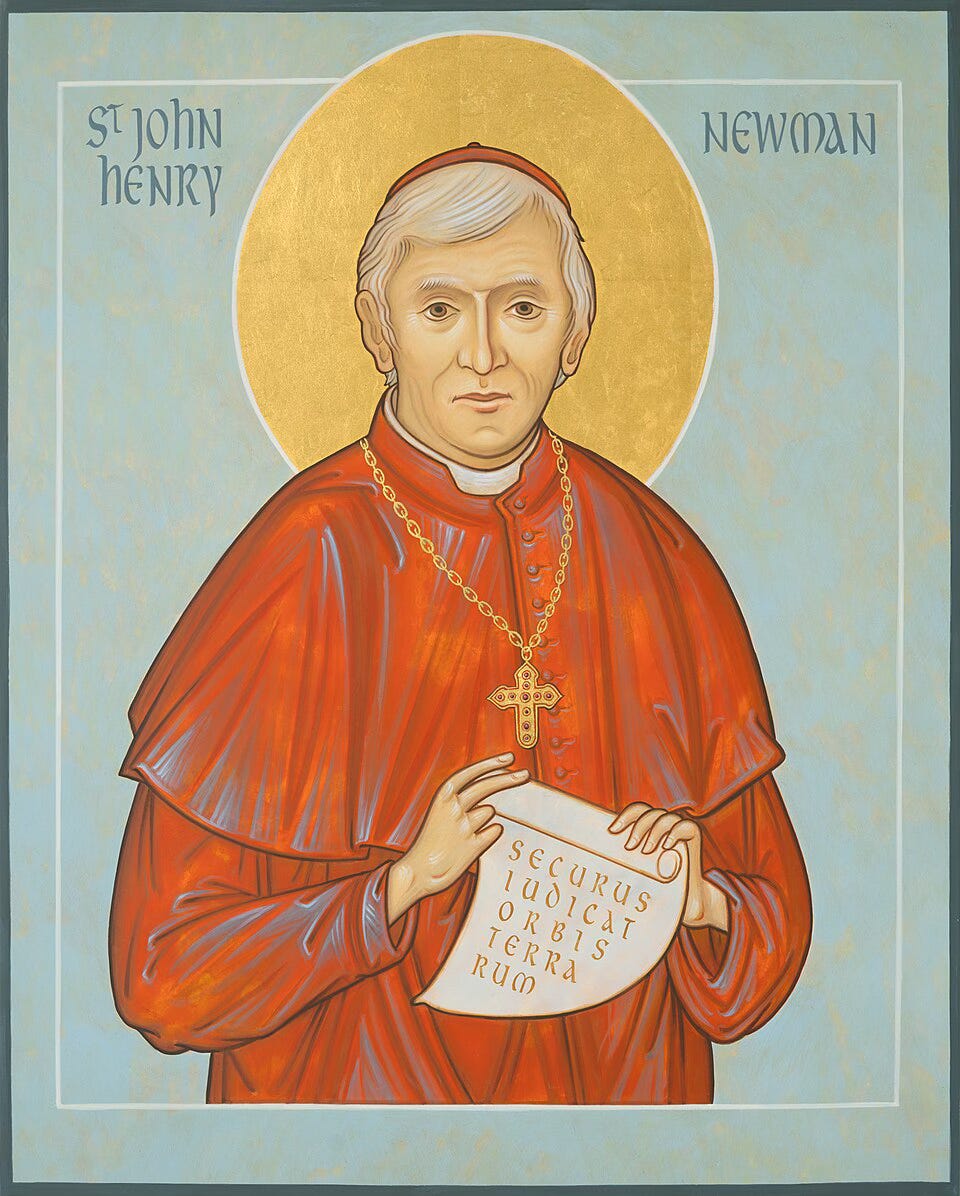
St. John Henry Newman, pray for us!